Favorite Photos

Favorite Photos
Bernini's Ecstasy of St. Teresa

Thursday, November 3, 2011

A Dose of Home: Mama's Table

I have to apologize for not posting anything on this site for awhile now. I am not in Rome at the moment. This hiatus though unplanned was unavoidable. After 33 years, 8 major moves, and 2 sabbaticals, retirement looms in the near horizon. In preparation for this, I came home to make arrangements to complete our retirement home. While here and in the midst of pondering what this next stage in our lives will bring us, I was invited by my aunt to visit her at her place up in Baguio City, the capital of the mountainous province of Benguet. The last time I was here was over 10 years ago.

The drive from Manila took a little over 5 hours. The first part of the journey was on wide highways built by Japanese expertise which bypassed the busy town centers of the provinces of Bulacan, Pampanga, and Tarlac. When the highway ended, the going became slower; the provincial roads brought us right through the centers of towns in Dagupan Pangasinan and La Union. After La Union, we started to climb the mountains, zigzag roads getting steeper, hairpin turns coming one after the other and finally we reached the top and entered the city of Baguio.

To say that I was disappointed would be an understatement. The Baguio of my childhood was full of pine trees, wide open views of the mountains near and far, fresh chilly air redolent with the fragrance of pine. This Baguio was lined with houses, houses and more houses. The smell of pine was overpowered by gasoline fumes exuded by the numerous vehicles stuck in traffic! We finally turned onto a road leading to the Baguio Country Club and here finally the pine trees began to emerge.


View of Mountains
My aunt’s place is right out of the pages of my childhood memories of Baguio. It sits right on top of the mountains with magnificent views, constantly flowing breeze, and so high up that one can almost reach up and touch the sky (another childhood notion of mine). The house, built by my uncle is literally a glass house, giving one a 180 degree view of the surrounding mountains, a truly awesome sight!


In this lovely environment, my cousin, Chef Vicky Tinio Clemente operates a one of a kind dining establishment called Mama’s Table. A reservation only place, minimum party of six and no menu because Chef Vicky will cook what she finds in the market on the day of your reservation. She doesn’t advertise, people come to her table upon the recommendation of friends and many of them return themselves. The day we arrived she was in the midst of serving lunch to a party of 10. Judging from the conversation, the laughter and clink of silverware, they were having a wonderful time!


One of the tables at Mama's Table
 We were served lunch, not the gourmet lunch with the appetizers and main dishes and desserts of the other table but delicious filipino food, pesa (chicken soup with vegetables), sayote top (leaves and stems of the chayote) salad, beefsteak filipino style and fragrant steamed rice, food that made my long absent filipino soul sing! There is a saying in filipino "nagpapataba ng puso" which literally translated is "making the heart fat" and that is how I felt after eating in this wonderful place, stomach filled and emotionally satisfied! 

On our way down, we took the longer route through the Marcos highway which brought us through many of the towns in Benguet, where the mountains are still forested with the trademark pines of the mountain province. Intermittently we would pass little storefronts along the highway selling bananas, mangoes, brooms, wooden furniture, wooden carvings and so much more.

Past and present merged in this side trip to Baguio. Coming back home and rediscovering the joys of childhood and encountering the frustrations of living in a developing, albeit struggling country is beginning to beckon like an adventure to be lived and enjoyed! In the meantime, it's back to beautiful Rome and living a daily dose of Rome for a little while longer!

Thursday, October 20, 2011

Ancient Rome: Roman Women

Walking the streets of Rome, riding the metro and the buses brings me in contact with large numbers of ordinary Roman women, professionals, vendors, tour guides, sales girls, waitresses, bar tenders, construction workers, soldiers, mothers, grandmothers, daughters etc. My general impression has been of women comfortable in their sexuality, educated, confident and assertive, women who will certainly leave written and other more graphic, more tangible accounts of their lives.


Julia Domina, wife of Septimus Severus (Severan Dynasty)
was knownto be the power behind her husband's rule.
 Unfortunately, for us, ancient Roman women left hardly a trace of what their lives were like. Accounts of women’s daily life, and in some rare instances a particular woman’s contribution to society, are limited to written accounts authored by men and mostly about the women of the upper or elite class. So it is within this context that we see what life was like for the women of ancient Rome. I have been taking pictures of pictures of these Roman women, and it is intriguing and fascinating to see how much one can deduce (or imagine) from these.


Faustina, Marcus Aurelius' wife

Cornelia, mother of the Gracchi
picture by mharrsch
Ancient Rome was a patriarchal society and as such, its women were defined by the men in their lives and primarily valued as wives and mothers.


Baby Girl

 From the moment of birth, girls were subject to the rule of their fathers, the pater familias. A symbolic but highly significant ceremony emphasizing this absolute control was carried out at the moment of birth where the infant was placed at it’s father’s foot and left entirely to his discretion, he could accept the child as his by picking it up, or reject it by leaving it where it was. In the latter case, the infant was left at the side of the Tiber or left to starve to death. Accounts of these types of exposures put the majority of infants exposed as being female or very sickly male infants.


Antonia

Claudia, daughter of Claudius
and Messalina

Another proof of this absolute control fathers had over their daughters lay in their names. Daughters did not really have their own names; they were given a feminized version of their father’s surname. So Mark Anthony’s daughter was called Antonia, Julius Caesar’s daughter was called Julia (she became the wife of Pompey).


Agrippina the Younger
 A daughter of Marcus Agrippa was called Agrippina, (the younger, the mother of Nero). If he had more than one daughter the elder daughter would be called the elder, the next daughter would be called the younger, the third daughter would be the third etc.


Little girl dressed for the day

Girls went to public primary school and were educated with or in the same manner as the boys. Children of the elite learned Greek and Latin and many women were well educated and some highly so. However, when they came of age, because women did not take part in public life, formal education ceased and they were passed over to their mother’s care who taught them the skills needed to become good mothers and also how to run a household efficiently.


of marriageable age

It was the duty of the pater familias to find a husband for his daughters. First marriages were usually arranged but the couple needed to be old enough to consent to the marriage. The age of consent for boys was 14 and 12 for women. It was the practice to choose an older man for one’s daughter and most women would move into their husband’s home.


a young girl of marriageable age

During the early Republic, once the daughter married, control over her was passed from her father to her husband but by the time of the Empire, the father’s control of his daughter remained unchanged even when she moved into her husband’s home. This gave the woman some autonomy in that control of her assets, in the form of her dowry, reverted to her upon her father’s death (in the absence of a male sibling).

The primary duty of women was to bear children, being infertile was grounds for divorce. However, they were also expected to be the first teachers of their children. The responsibility of imparting Roman culture and preparing their children for citizenship was theirs. They did participate in politics but only in the influence they could exert on their husbands. There was however in 195 BC, the first recorded protest by women, where the women of Rome came together to support the repeal of the Oppian Law (prohibiting women from buying jewelry, passed during the wars against Hannibal with the support of the women at the time). They gathered en mass in the Forum when the repeal was being debated and were able to have the law abolished.


Bath slippers very similar to our flip flops
 A Roman matron's day started with a trip to the public baths. Yes they were allowed to use the public baths. Some of them had separate areas for men and women, while others  had women using the baths in the morning, while the afternoon was reserved for the men. There were of course private baths as well.

Roman women also took great pains with their appearance, putting on a foundation (which contained high levels of lead), lining their eyebrows with kohl and using eyeshadow made from safron among other things.


They also took a lot of time having their hair done, with the empress and other prominent women setting the trend.


Roman women's basic item of clothing was the tunic, similar to those worn by men but were fuller and longer. There were two types of tunic, the chiton, which was two pieces of cloth sewed together, leaving holes for the arms and then belted on the waist or under the breasts. The stola on the other hand was fastened at the shoulders leaving a sleeveless tunic. Married women would wear this on top of another tunic, to emphasize their respectability. They also donned the palla, a kind of cloak which could be pulled up to cover the head, when leaving their homes.

Roman women had some freedom. They could leave their houses, go to the market, visit with friends and other similar pursuits. They were also allowed to attend the games in the colloseum and attended banquets with their husband.


If little is known about Roman women's lives even less is known about the elderly women in ancient Roman society. Historical sources have put women's life expectancy (in ancient Rome) at birth at 20 to 30 years. If they lived to the age of 15, this went up to about 40 to 50 years. As I went around taking pictures, I came  across these busts of  two elderly women. I would put their ages at around 50 or so, but I could be wrong. This two look decidedly grumpy, I wonder why? 

Sunday, October 9, 2011

Churches of Rome: The Charming and the Strange

I don’t know if a church can be called charming, but if any church can be, then that would be The Church of Sta. Maria in Cosmedin. This small church is located in the Piazza della Boca della Verita, at the end of the Via Circo Massimo, and opposite the oldest marble structure in Rome, The Temple of Hercules Victor.


Temple of Hercules Victor

Because of it's circular shape this structure was thought to be  a Temple to Vesta, but was later determined to have been built in honor of Hercules, who as legend tells it, came to this area during the course of his 12 labors. The mistake is understandable as the grace, elegance and simplicity of this structure gives it a decidedly feminine feel. This temple is, for me, one of the most beautiful of Rome’s ancient structures.


Facade of Sta. Maria in Cosmedin

Across the street is the Church of Sta. Maria in Cosmedin, a beautiful, very typical medieval basilica. Cosmedin is Greek for decoration or ornament and may have been added to the name of the church in reference to the rich decorations placed there by Pope Hadrian.


The altar, the baldachino and the fresco on the apse

A curious and charming touch is the main altar which is actually a pink ancient Roman bathtub over which can be seen a thirteenth century baldachino. The fresco on the central apse is a modern one done in medieval style, but underneath traces of the original frescoes are beginning to emerge. There are beautiful 11th century frescoes on the side altars and beautiful, cosmati mosaic floors.


This church also hold the relics of St. Valentine, the saint of lovers. They honor his relics every year with a procession on St. Valentine's Day.


The skull of St Valentine
On the left side of the main altar is a staircase leading to Hadrian’s crypt found underneath the basilica. This was built by Pope Hadrian (772-795) to house the many relics he had taken from the catacombs.


Hadrian's Crypt


What was once the sacristy is now a crowded bookstore. And in here one finds one of the main treasures of this church, an 8th century mosaic of the Holy Family, part of the giant mosaic commissioned by Pope John VII for the St. Peter’s Basilica.


Most people who visit this church actually come to see and put their hands through the Boca de Veritas, (found in the side of the church) an ancient manhole cover that was known as a “lie detector” since the middle ages. Legend says that anyone who told a lie when one’s hand was in the mouth of the sculpture, would have it bitten off. There are always long lines of people waiting to prove that they are not liars. A scene from the movie A Roman Holiday, one of those truly memorable movie moments, shows Gregory Peck holding out his arm (without his hand) to  Audrey Hepburn.


from wikipedia
When I entered The Church of San Stefano Rotonda for the first time, I did not know what to think about this round church, an ancient structure built in 460 AD and dedicated to St. Stephen, the Catholic Church's first martyr.


Interior of San Stefano Rotondo


This Church is the first in Rome to have a circular plan, inspired by the Church of the Holy Sepulcher in Jerusalem. At first sight, it is quite impressive especially when you walk into its wide circular space. Then you notice the new ceiling, which is lined by wooden slats and is incongrous with its marble surroundings. In addition it appears to be sagging in on the structure.


One of the 4 side chapels
 It's four chapels form a circular cross, its interior is composed of two concentric circles and its twenty two windows on top of the nave give the magnificent circular space a dramatic cast.


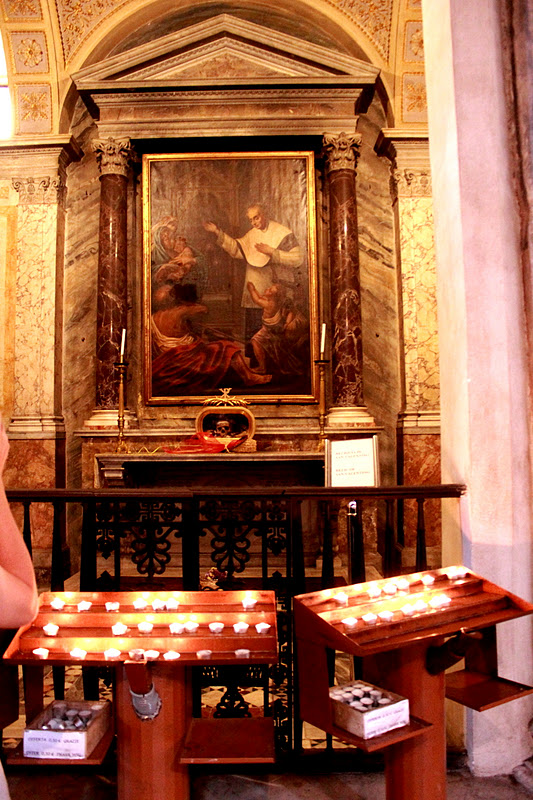
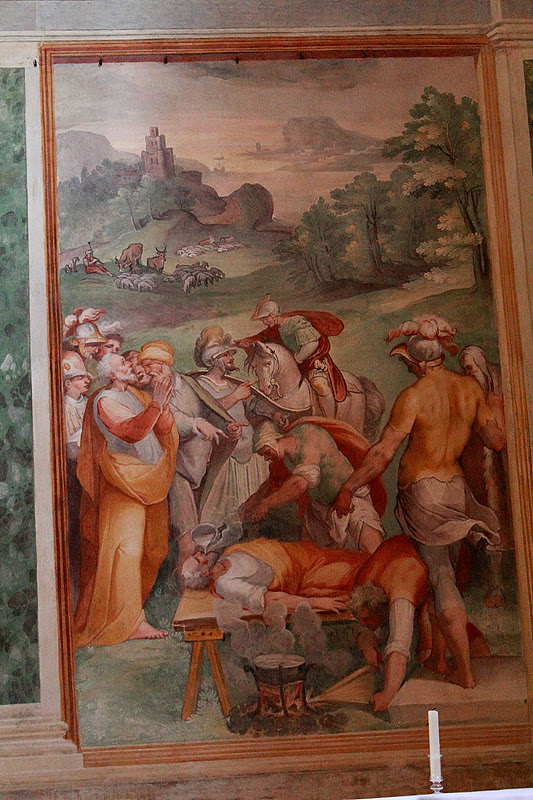
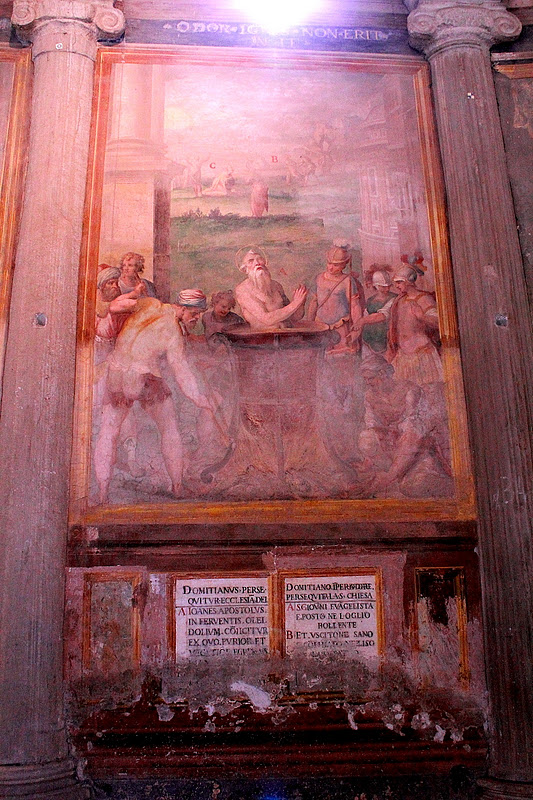
In spite of the general beauty of its architecture, it's general atmosphere, is not conducive to prayer. The bizarre character of this church lies in the series of frescoes on the walls of the outer circle showing stomach turning scenes of various saints being martyred.


There are scenes  of            impalement, beheadings, boiling in oil, disembowelments, hangings, crucifixions, drawing and quarterings, being fed to wild beasts and many more. These thirty four frescoes were commissioned by Gregory XIII. Underneath each is an explanation of the method of martyrdom and the name of the emperor who ordered the execution.


The impact of these frescoes are quite disturbing. Charles Dickens visited this church in 1845 and had this to say, "such a panorama of horror and butchery no man could imagine in his sleep, tough he were to eat a whole pig, raw for supper".


I walked around the church taking in these scenes of horror, feeling like I was walking around a Chamber of Horrors. After viewing these frescoes, I decided that the magnificence of the structure was overshadowed by the disturbing frescoes lining its walls. I left feeling decidedly chilled and wondering how many people could actually worship in this place.


Sunday, October 2, 2011

Ancient Rome: Roman Sexuality

Ancient Romans have a reputation, somewhat exaggerated by Hollywood, of being, shall we say, sexually unrestrained. Made for television series like Rome and Spartacus paint a picture of the upper class of Romans living lives characterized by excess and engaging in perverse unrestrained sexuality. In terms of sex, though shocking to many in this day and age, the ancient Romans were simply following the rules, norms and mores prevalent at the time.

JR Clarke, a professor of Art History and an expert on Roman sexual iconography, opens for us a view of pre-Christian Rome, where sex was more than just an act of procreation, was never a sin but more a sport, an art, a source of pleasure, and a blessing from the gods, and as such was engaged in with variety as well as humor. In his books Roman Sex and Looking at Lovemaking, he puts forward what sex meant to the ancient Romans as depicted by their erotic art, something he has studied for over 30 years.

Ancient Roman erotic art is explicit but more humorous than pornographic. (This may be because when these were first discovered in Pompeii, a lot of the more “risqué” were destroyed. Reminiscent of the Vatican’s attempt to “castrate” the nude male statues in and around Rome at one time) My very correct and dignified mother recounted her seeing, on a visit to Pompeii, many years ago, a mosaic of a man with an enormous erection, requiring the use of a wheelbarrow to carry it. Art of this nature, exaggerating the girth and length of the penis may be attributed to the ancient Roman’s belief that the erect penis or the fascinum was the symbol of Priapus, the Roman fertility god, dispenser of fertility and prosperity. In addition, it was also believed to ward off evil spirits and bring good luck. It’s no wonder then, that to this day you will see wooden, marble or stone, painted or unpainted fascinum in souvenir shops.

If the fascinum was the symbol of fertility and thus venerated, sex for the ancient Romans was a gift from the gods, specifically the goddess, Venus and as such enjoying it was one of life’s pleasures. So correct was this that they believed both partners should be good at and derive pleasure from the act in order to have healthy children.


Man encouraging new wife fresco found in Agrippa's Villa 

Notwithstanding sex being a gift from the gods, there were, however, rules as to how one was to indulge in this. From the beginnings of Roman society, the father, pater familias, was the center of everything. He was the absolute head and literally had the power of life and death over his entire household. From this stems the first rule: the free Roman man must always be the dominant partner in the act of intercourse. He is free to have sex with whomsoever he wishes as long as they were his social inferiors i.e. any woman, any man, a female slave, a male slave, (young or old). Adultery was committed only if he had sex with someone of the same status. As for the slaves, they had no rights under Roman law and were considered property of their masters and as such were all potential sexual “toys” according to the will of their domus or domina. (Note the fresco above where the slave is witness to the encounter between the master and mistress of the house).

The second rule flows from this first rule: The Roman man must “take pleasure” and not “give pleasure”. In terms of oral sex then, it was ok for the Romans to have it performed on them, but for them to perform it on another was considered so vile, the act of which dirtied his most important social instrument (the mouth). So abhorrent was this, that to be accused of performing oral sex was equivalent to being accused of treason.

The ancient Romans perception of beauty and pleasure was not limited to the opposite sex. There must have been homosexuals, bisexuals and gays in ancient Rome, but they were not singled out or noticed since all forms of sexual activity was “normal”. They did not even have a term for these categories.  A Roman citizen was free to find beauty and pleasure in a man’s body as well as in a woman’s, as long as the rules are followed. These are: first, the Roman citizen must have the “active” rather than the “passive” role, and second, the object of his desire must be of an inferior social rank. Those who are known to have had the “passive” role in these relationships were called pathicus and had the same status as the prostitutes, gladiators and actors.


                                          Perception of Beauty
                        
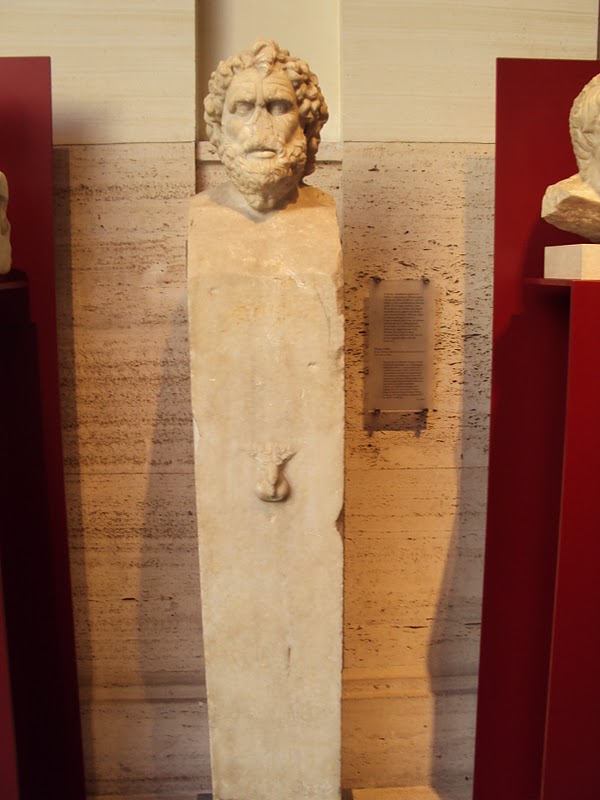
The dominance of the male, the worship of the fascinum also led the Romans to treat some traditionally marginalised segments of society (the third sex) in different ways. I speak of the hermaphrodites and the eunuchs. By virtue of the presence of the male genitalia in the hermaphrodites, they were granted “male status” and allowed some participation in society. On the other hand, by virtue of the absence of the male genitalia, the eunuchs were treated uneasily by Roman society. Castration was outlawed and anyone guilty of this could be prosecuted for assault including men who castrated themselves. Penalties attached to this offense were severe.


Statue of a Hermaphrodite in the Terme Museum

 Because Romans considered sex as something that happens between two people of unequal rank or between the master and an object of his desire, pedophilia was something that was not frowned on or condemned. On the contrary, it was accepted that a wealthy man will have a young boy or young girl (usually a slave) in his household with whom he will have sex with.

The women of Imperial Rome were beneficiaries of what can be called a feminist revolution. Because of the many wars during the republican era, many men were killed and the women inherited the family’s wealth and began to run things on their own. This autonomy bred confidence which led women to take control of all aspects of their lives, including their sexual lives. They expressed their sexual preferences and took their pleasures where and with whom they wanted, provided that the partner was of an inferior social standing.


Woman as initiator fresco in Agrippa's Villa

In the middle of the third century, when barbarian invasions ushered in an era of uncertainty, instability and economic crisis, changes in all areas of Roman life including the sexual sphere began to take effect. A new conjugal code is forged. Fidelity is imposed, homosexuality was condemned, and the main reason for sexual intercourse was to have children. Women were recognized as having important roles in the family and society but were expected to remain virgins until marriage, and to remain faithful to her husband till death. This new morality paved the way for the coming of Christianity.  

But before then, the fascinum accompanied the Roman even to the grave.


a tombstone

Wednesday, September 28, 2011

Ancient Rome: Where they Lived: Villa, Domus, Insula

One of the more interesting exhibits I have visited this summer here in Rome is the "Once We were Romans" exhibit in the Museo Nationale Romano in the Palazzo Massimo, and the most interesting part, for me, was the display of the excavated remains of the houses (domus) and villas of the wealthy Romans.


There were three types of Roman houses at the time of Augustus Caesar. The first two were the homes of the "elite" , the nobility, the wealthy, the powerful upper class Romans. These were the villa, which were country homes and the domus, usually located in the city. Most of the wealthier Romans, however, owned a domus in the city and a country house or villa.


Then there was the insula, which were rented accomodations, essentially a  combination of modern day  condominiums and tenement housing. Here the “wealthier” tenants lived on the ground or lower floors with larger, cleaner and better appointed accommodations. The less able were housed on the higher floors, the higher one went, the worst the living space became, until one reached the top floor where the living space was barely habitable. Accomodations on the top floor of the Insula were only taken by people who could not afford anything better. These were usually makeshift additions to the building and being on the top floor made it very difficult to escape if a fire ever started in the building. And fires happened with great frequency in ancient Rome! This is in contrast with today's condominiums where the higher one goes, the more expensive the accomodation becomes. 


Ruins of top floors of insula beside the Capitoline
 The most opulent domus in ancient Rome had to be Nero's Domus Aurea or Golden House, whose facade was rumoured to have been coated with gold. Ok, technically this was not really a domus but Nero called it his domus, so a domus it is. Nero's domus was razed to the ground by Vespasian, over which he built the Coliseum. Trajan later built his baths over the rest of the complex and it was pretty much forgotten until recent excavations unearthed intact portions of it, reminders of the magnificence or opulence of the place. Unfortunately, these ruins are closed for restoration at the moment.

Livia’s villa, found in Prima Porte, a suburb of Rome and presently still being excavated, may be more representative of the ancient villas of the nobility than the Golden House. This villa was part of the dowry of Livia Drusilla when she married Octavian, later known as Augustus Caesar.


They discovered a windowless room with painted frescoes of birds, tress, flowers and fruits of the time on all the walls, which they restored and moved into the museum. It is quite beautiful!

I sat in the middle of this room for a long time. The colours were very soothing,  and the rendition of the fruits, flowers and birds were detailed and very naturalistic.


The Domus was smaller than the villas, being limited by the available space in the city. The museum had the remains of Aggrippa's (Augustus' friend and son-in-law) Domus/Villa found in the Trastevere Area.


Excavation Site

Villa floor made of alabaster
 They were usually rectangular in shape divided into two areas, with a garden and a peristyle off to one side and the atrium on the other. It was surrounded by a perimeter wall with a front door sporting a knocker made of bronze.  One enters the domus through the vestibulum or entrance hall which were lined with frescoes and had mosaic floors. Most of the floors were made of marble but some of the more opulent villas had floors made of alabaster.


atrium walls of Agrippa's Domus
 The main part of the house was the atrium where guests and clients were greeted. In the middle of the atrium was a "water feature",  underneath an opening in the roof, which was a shallow sunken pool collecting rain water which was then stored in a cistern for the use of the household. This was lined with marble and around it, a floor of small mosaics. The Atrium contained a statue and an altar to the household god.  Around the atrium would be found the family’s main rooms.

The walls of the cubiculum or bedrooms were filled with brightly coloured frescoes, (some of them with very explicit erotic paintings) and mosaic floors with intricate geometric designs.


Erotic fresco on bedroom wall


cubicula


detail of fresco


bedroom with frescoes and parts of ceiling

The tablinium or office was where the master would meet his clients. This was usually located between the atrium and the peristyle.

The dining room or triclinum was also elaborately painted with frescoes and had mosaic marble floors. These contained coaches around a low table. The colors used in the dinning room were usually darker than those of the other rooms.

There were no kitchens as we know them today. Because food preparation was a task left completely to the slaves, the area where this was done was small, dark, poorly ventilated and relegated to an obscure area of the house.

Most domus had a bathroom, some only in the form of latrines, since most Romans made it a habit to visit the public baths not only for their daily bath but as a place to meet people and do business. Most domus had running water and sewage disposal.

The Romans loved color, they put a lot of that around their temples, their monuments, their buildings. Their homes were the same, brightly colored and containing precious works of art, frescoes, marble inlays and statues and beautiful mosaic floors. They were proud of their homes, using these to mirror their accomplishments and enhance their reputations. But more than this, they treasured them as their place of refuge, their safe haven.