Favorite Photos

Favorite Photos
Bernini's Ecstasy of St. Teresa

Saturday, November 26, 2011

The Campidoglio ... Home of the Dying Gaul

One of my favourite places to take a rest near the Colloseo Metro stop is a little corner in the garden on the right side of the Capitoline Hill, the smallest of the Seven Hills of Rome located between the ancient Field of Mars and the Forum. In ancient times, the Capitoline Hill was for the Romans what the Acropolis was for the Greeks. Here the Romans worshipped their gods in three very important temples, the temple of Juno, the temple of Virtus and the most important, the temple of Jupiter Optimus Maximus Capitolinus whose size and importance rivalled the Parthenon in Athens. Here too was located the Tabularium (which can still be visited today), and served as the Roman Empire’s main archive.

Model of the Temple of Jupiter Maximus

During the Middle Ages, Michaelangelo was asked to redesign the square and all the existing buildings around it, this is the Campidoglio as it exists today.


The Cordonata leading to the Piazza Campidoglio
 I like climbing the Cordonata, the humongous staircase leading from the bottom of the hill to the piazza. From the top of the hill, behind the piazza, one is treated to a glorious sight of the Forum and the full length of the Via Forum Imperiale. There is a nice breeze that flows almost continuously in this little garden. Benches are there for the weary and there are even times when I’ve sat there with a book and a flask of coffee. The book doesn’t get read much as the peacefulness and the beauty of the garden can lull one into a semi-catatonic state.

There were times; however when I allowed myself to be lured into the Capitoline Museum, the oldest in Rome started when Pope Sixtus donated some bronze statues to the people of Rome and located them on the Capitoline Hill, way back in 1471. Let’s see, I think I’ve gone in 4 times already, once with my daughters, once with friends, and twice by myself.

There’s a lot to see but I do have my favourites. The very first thing, upon entering the museum, located in the courtyard and completely unavoidable because of its size is the statue of Emperor Constantine, rather the dismantled statue with some massive body parts displayed lined up on one side of the courtyard.


In the new wing in the center of its glass covered hall is found the original Equestrian Statue of Marcus Aurelius, a truly awesome sight!


As I walked around and almost under the belly of his great giant horse I caught glimpses of the original shinny bronze through the enveloping patina of age.


The Statue of Marsyas, who challenged Apollo to a singing contest and for his temerity was condemned to being flayed alive is also very unforgetable. The artist used a violet veined marble to render in dramatic fashion the livid color of his tortured body.


In the same room, I came upon a statue in a shadowed corner of the room, with this beautiful face......


Counted in my favoured pieces would be the She Wolf Suckling the Twins,


The Spinario which is a bronze statue of a boy removing a thorn from his foot,


The Little Girl playing dressed to the nines


and Bernini’s Medusa, a most sympathetic rendition of this serpent-haired, hater-of-man, mythical creature.


As I looked at Bernini’s Medusa, I could not help but compare this with Caravaggio’s.


But what brought me time and again to come back into the museum is Him....The Dying Gaul.


I don’t know what it is about this statue, after all it is only a copy but there is something arresting about it. I have taken lots of pictures and like many have sat on one of the viewing chairs time and again, just staring at him! He is a beautiful man and with that anguish on his face, he can melt any woman’s heart.....

Saturday, November 12, 2011

Beautiful Assissi!

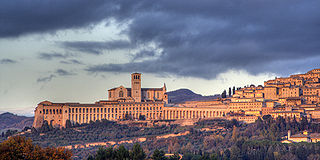
When my two sisters, a niece and some friends came to Rome, we decided to take a day trip to Assissi, as per my sister’s birthday wish. We left Rome after lunch in a hired van, and after a pleasant two hour drive, part of it through the rolling hills of Umbria, we saw Assissi, with its pink hued buildings crowning the top of one of the many hills in the province of Perugia. The sight of this hilltop town can leave one speechless! And there is an aura of peacefulness that envelops Assissi, a peacefulness I began to recall, (from when we visited almost 16 years ago) as we began the climb towards this beautiful town.


Picture by Roberto Ferrari

The peaceful atmosphere that envelopes this town may very well be because Assissi has been a holy place long before St. Francis and St. Clare. The ancient town of Assissum, so legend goes, grew around a sacred spring which was venerated by the Etruscans and then the Romans and in the 1st century BC, a temple to Minerva, "the Roman goddess of wisdom" was constructed. In the 16th century, the temple was restored and consecrated and became the church of Santa Maria Sopra Minerva, dedicated to the Virgin Mary, “the queen of Christian Wisdom”. In addition to this and the Churches of St. Francis and St. Clare, there are 11 more churches within the town of Assissi.


Original facade of Temple of Minerva

Our driver left us at the courtyard of the Church of Sta. Chiara, and we were to meet him in the parking lot of the Church of St. Francis of Assisi at the other end of town. The church of Sta. Chiara is dedicated to St. Clare, a follower and friend of St. Francis and the founder of the Order of Poor Claires, or the Sisters of St. Claire. This order is very familiar to ex-convent school girls like me who continue to send eggs to the Sisters of St. Claire when there is need to ensure good weather.


church of Sta. Chiara

The facade of the Church is made of horizontal bands of pink and white Assyrian marble and right at the center is a rose window.


On the right side of the main nave, one sees the Oratory of the Crucifix, a chapel that contains the miraculous 12th century crucifix of St. Francis.

Underneath the church is the crypt which houses the preserved body of St. Clare, her face protected by a wax mask.

When we entered the chapel it was raining heavily, but by the time we came out, the rains had stopped and the sky was beginning to brighten as the sun struggled to emerge from behind the clouds. Beside the church is a terrace-like veranda, where we lingered for a while looking down on the surrounding countryside as well as getting a glimpse of the lovely stone houses of Assissi.


Walking through this very picturesque town is an experience that one doesn't forget.


The narrow cobbled stone streets, crowded in on both sides by quaint, charming stone houses, alluring coffee and gelato shops, unexpected corners selling art work and small, cramped shops selling items of Assissi embroidery, (a form of counted thread embroidery practiced in Assissi since the 13th century), hand painted pottery, tiles, plates and religious articles galore.

Meandering through these streets was a treat, but the best was yet to come! Reaching the topmost part of the town, one catches a panoramic view of the Church of St. Francis, it literally took my breath away!


The Papal Basilica of St. Francis of Assissi is the mother church of the Order of the Friars Minor, the Franciscans. It is one of the most important pilgrimage sites for Catholics and has been a Unesco heritage site since 2000. The Basilica is composed of three parts, the upper church, the lower church and the crypt, that contains the remains of St. Francis.


The Basilica with view of entrance to lower church

The upper church is done in early Gothic style, with it's towering spires and rose window. Both the upper and lower churches are decorated by frescoes from such Italian masters like Giotto and Cimabue. (Unfortunately no picture taking is allowed inside the Basilica.) We walked the whole length of the upper and lower churches and then proceeded to the crypt, in the center of which the remains of St. Francis, in a simple wooden box are venerated. The atmosphere of the crypt was one of reverence and respect, people sat on the benches or knelt on the pews in silence or speaking in hushed tones. In one corner sat a Franciscan friar, whom I approached and asked about having a mass said for my sister, whose birthday it was that day.

By the time we had all gathered at the parking lot of the Basilica, the sun was already beginning to set and we reluctantly got into our van to begin the almost 2 hour journey back to Rome. But before we could begin the downward drive, we had to stop at a traffic light to allow visitors on their way up to pass on the narrow one way street, giving us a last glimpse of the houses of beautiful Assissi.


Thursday, November 3, 2011

A Dose of Home: Mama's Table

I have to apologize for not posting anything on this site for awhile now. I am not in Rome at the moment. This hiatus though unplanned was unavoidable. After 33 years, 8 major moves, and 2 sabbaticals, retirement looms in the near horizon. In preparation for this, I came home to make arrangements to complete our retirement home. While here and in the midst of pondering what this next stage in our lives will bring us, I was invited by my aunt to visit her at her place up in Baguio City, the capital of the mountainous province of Benguet. The last time I was here was over 10 years ago.

The drive from Manila took a little over 5 hours. The first part of the journey was on wide highways built by Japanese expertise which bypassed the busy town centers of the provinces of Bulacan, Pampanga, and Tarlac. When the highway ended, the going became slower; the provincial roads brought us right through the centers of towns in Dagupan Pangasinan and La Union. After La Union, we started to climb the mountains, zigzag roads getting steeper, hairpin turns coming one after the other and finally we reached the top and entered the city of Baguio.

To say that I was disappointed would be an understatement. The Baguio of my childhood was full of pine trees, wide open views of the mountains near and far, fresh chilly air redolent with the fragrance of pine. This Baguio was lined with houses, houses and more houses. The smell of pine was overpowered by gasoline fumes exuded by the numerous vehicles stuck in traffic! We finally turned onto a road leading to the Baguio Country Club and here finally the pine trees began to emerge.


View of Mountains
My aunt’s place is right out of the pages of my childhood memories of Baguio. It sits right on top of the mountains with magnificent views, constantly flowing breeze, and so high up that one can almost reach up and touch the sky (another childhood notion of mine). The house, built by my uncle is literally a glass house, giving one a 180 degree view of the surrounding mountains, a truly awesome sight!


In this lovely environment, my cousin, Chef Vicky Tinio Clemente operates a one of a kind dining establishment called Mama’s Table. A reservation only place, minimum party of six and no menu because Chef Vicky will cook what she finds in the market on the day of your reservation. She doesn’t advertise, people come to her table upon the recommendation of friends and many of them return themselves. The day we arrived she was in the midst of serving lunch to a party of 10. Judging from the conversation, the laughter and clink of silverware, they were having a wonderful time!


One of the tables at Mama's Table
 We were served lunch, not the gourmet lunch with the appetizers and main dishes and desserts of the other table but delicious filipino food, pesa (chicken soup with vegetables), sayote top (leaves and stems of the chayote) salad, beefsteak filipino style and fragrant steamed rice, food that made my long absent filipino soul sing! There is a saying in filipino "nagpapataba ng puso" which literally translated is "making the heart fat" and that is how I felt after eating in this wonderful place, stomach filled and emotionally satisfied! 

On our way down, we took the longer route through the Marcos highway which brought us through many of the towns in Benguet, where the mountains are still forested with the trademark pines of the mountain province. Intermittently we would pass little storefronts along the highway selling bananas, mangoes, brooms, wooden furniture, wooden carvings and so much more.

Past and present merged in this side trip to Baguio. Coming back home and rediscovering the joys of childhood and encountering the frustrations of living in a developing, albeit struggling country is beginning to beckon like an adventure to be lived and enjoyed! In the meantime, it's back to beautiful Rome and living a daily dose of Rome for a little while longer!

Thursday, October 20, 2011

Ancient Rome: Roman Women

Walking the streets of Rome, riding the metro and the buses brings me in contact with large numbers of ordinary Roman women, professionals, vendors, tour guides, sales girls, waitresses, bar tenders, construction workers, soldiers, mothers, grandmothers, daughters etc. My general impression has been of women comfortable in their sexuality, educated, confident and assertive, women who will certainly leave written and other more graphic, more tangible accounts of their lives.


Julia Domina, wife of Septimus Severus (Severan Dynasty)
was knownto be the power behind her husband's rule.
 Unfortunately, for us, ancient Roman women left hardly a trace of what their lives were like. Accounts of women’s daily life, and in some rare instances a particular woman’s contribution to society, are limited to written accounts authored by men and mostly about the women of the upper or elite class. So it is within this context that we see what life was like for the women of ancient Rome. I have been taking pictures of pictures of these Roman women, and it is intriguing and fascinating to see how much one can deduce (or imagine) from these.


Faustina, Marcus Aurelius' wife

Cornelia, mother of the Gracchi
picture by mharrsch
Ancient Rome was a patriarchal society and as such, its women were defined by the men in their lives and primarily valued as wives and mothers.


Baby Girl

 From the moment of birth, girls were subject to the rule of their fathers, the pater familias. A symbolic but highly significant ceremony emphasizing this absolute control was carried out at the moment of birth where the infant was placed at it’s father’s foot and left entirely to his discretion, he could accept the child as his by picking it up, or reject it by leaving it where it was. In the latter case, the infant was left at the side of the Tiber or left to starve to death. Accounts of these types of exposures put the majority of infants exposed as being female or very sickly male infants.


Antonia

Claudia, daughter of Claudius
and Messalina

Another proof of this absolute control fathers had over their daughters lay in their names. Daughters did not really have their own names; they were given a feminized version of their father’s surname. So Mark Anthony’s daughter was called Antonia, Julius Caesar’s daughter was called Julia (she became the wife of Pompey).


Agrippina the Younger
 A daughter of Marcus Agrippa was called Agrippina, (the younger, the mother of Nero). If he had more than one daughter the elder daughter would be called the elder, the next daughter would be called the younger, the third daughter would be the third etc.


Little girl dressed for the day

Girls went to public primary school and were educated with or in the same manner as the boys. Children of the elite learned Greek and Latin and many women were well educated and some highly so. However, when they came of age, because women did not take part in public life, formal education ceased and they were passed over to their mother’s care who taught them the skills needed to become good mothers and also how to run a household efficiently.


of marriageable age

It was the duty of the pater familias to find a husband for his daughters. First marriages were usually arranged but the couple needed to be old enough to consent to the marriage. The age of consent for boys was 14 and 12 for women. It was the practice to choose an older man for one’s daughter and most women would move into their husband’s home.


a young girl of marriageable age

During the early Republic, once the daughter married, control over her was passed from her father to her husband but by the time of the Empire, the father’s control of his daughter remained unchanged even when she moved into her husband’s home. This gave the woman some autonomy in that control of her assets, in the form of her dowry, reverted to her upon her father’s death (in the absence of a male sibling).

The primary duty of women was to bear children, being infertile was grounds for divorce. However, they were also expected to be the first teachers of their children. The responsibility of imparting Roman culture and preparing their children for citizenship was theirs. They did participate in politics but only in the influence they could exert on their husbands. There was however in 195 BC, the first recorded protest by women, where the women of Rome came together to support the repeal of the Oppian Law (prohibiting women from buying jewelry, passed during the wars against Hannibal with the support of the women at the time). They gathered en mass in the Forum when the repeal was being debated and were able to have the law abolished.


Bath slippers very similar to our flip flops
 A Roman matron's day started with a trip to the public baths. Yes they were allowed to use the public baths. Some of them had separate areas for men and women, while others  had women using the baths in the morning, while the afternoon was reserved for the men. There were of course private baths as well.

Roman women also took great pains with their appearance, putting on a foundation (which contained high levels of lead), lining their eyebrows with kohl and using eyeshadow made from safron among other things.


They also took a lot of time having their hair done, with the empress and other prominent women setting the trend.


Roman women's basic item of clothing was the tunic, similar to those worn by men but were fuller and longer. There were two types of tunic, the chiton, which was two pieces of cloth sewed together, leaving holes for the arms and then belted on the waist or under the breasts. The stola on the other hand was fastened at the shoulders leaving a sleeveless tunic. Married women would wear this on top of another tunic, to emphasize their respectability. They also donned the palla, a kind of cloak which could be pulled up to cover the head, when leaving their homes.

Roman women had some freedom. They could leave their houses, go to the market, visit with friends and other similar pursuits. They were also allowed to attend the games in the colloseum and attended banquets with their husband.


If little is known about Roman women's lives even less is known about the elderly women in ancient Roman society. Historical sources have put women's life expectancy (in ancient Rome) at birth at 20 to 30 years. If they lived to the age of 15, this went up to about 40 to 50 years. As I went around taking pictures, I came  across these busts of  two elderly women. I would put their ages at around 50 or so, but I could be wrong. This two look decidedly grumpy, I wonder why?