Favorite Photos

Favorite Photos
Bernini's Ecstasy of St. Teresa

Saturday, June 25, 2011

Mangiamo! Let's Eat!

I love Italian food...and nothing beats eating italian food in Italy, right? Well.......maybe eating french food in France? Hmm...that's something I need to think about. But that's for another time. Right now let's talk about food....Italian food, specifically eating italian food in italian restaurants in Rome!

There are things one needs to know about eating out in Italy. The most important being that meals are served and eaten leisurely. For Italians, meals are not only about consumption, it is more of a social event, when with friends or a family event, when with family. As such time is set aside, forgotten. So when you sit at a table in the restaurant, a waiter comes along and brings you a menu and then you're given time (a lot of time, for one used to fast food service) to look at the menu, then you order and your drinks are brought and then you wait..... and so on. When you're done, 2 hours could have gone by.

The next thing to be aware of is that italians eat late, lunch is usually between 1 and 3 or 4 in the afternoon and dinner may start at around 8 or 8:30 and go on until 11 or later. Most restaurants open at 12:30pm to 1:00pm for lunch and 7:30pm to 8:00pm for dinner.

A note of caution, when you receive an invitation for dinner or are going out for dinner, have a really light lunch, because there are four parts to a typical Italian meal:

The first is the antipasti which is made up of hot or cold appetizers, like melon wrapped with prosciutto, beef carpaccio, olives, parma ham with figs, marinated vegetables and many more delicious items like these.

This is followed by the primi piatti which most often will be a pasta with a sauce, or a risotto, sometimes gnocchi (dumpling), or polenta or maybe even soup.

The secondo piatti is the main course, either meat, fish or seafood. Side dishes of potatoes or a salad or some other vegetable can be ordered or are served with this course.

Then, the not to be missed part, the dolce or dessert, which can be a fruit, cheese, ice cream, and countless sweet concoctions. This is followed by coffee and then a digestivi, a liquor which as the name suggests, supposedly aids digestion.

The meal is accompanied by wine and lots of it. ( I am amazed by how relatively inexpensive wine is here!) You are of course free to skip the antipasti and the primi piatti and go straight to the main course, but you would be missing what may at times be the better part of the meal.

What we have tried doing here is to eat the "chinese way", which essentially means "sharing" a dish. On one occasion, there were four of us, so we had three orders of each course. The waiters kindly provided extra plates and utensils which made the sharing easier.

We have eaten in a lot of restaurants since we've arrived. Many of them memorable, some others, mainly tourist traps. Here are some of the more memorable ones, with a recollection of our experiences and reactions while eating there.

The Casina Valadier on the Pincio Hill

The Casina Veladier

We were invited by an Italian friend from Sienna to eat at this restaurant. We took Metro Line A from Termini, and got off at the Flaminio stop right at Piazza del Popolo. We had a drink at Rosati, a bar on the Piazza, and then walked up a long flight of steps to the Pincio terrace which afforded us a fantastic view of Rome, including St. Peter's Basilica.


Piazza del Popolo from the Pincio Hill

The Casina Veladier is a very upscale place, very close to the Pincio Terrace and is considered a watering hole by politicians, rock stars and the rich and powerful, or so we were told.

Our table by the window

The service was definitely impeccable. Thinly sliced zucchini stuffed with ricotta and zucchini blossoms stuffed with tomatoes was my antipasti. Decided to skip the primi piatti and and went directly to the main course, turbot baked in salt and served with spinach (this was very good!). Dessert was a chocolate dome with coffee mousse and a vanila bean at the center. We had a Montepulciano L'Abruzzo with the meal and finished it off with an espresso. Overall a good meal but rather expensive. What was most memorable was the view from the restaurant.

The view at dusk


Later that night


Would we go back to this restaurant? Yes.....if only for the view.

Alfredo y Ada

On the other end of the restaurant scale is a very charming mom and pop operation. At this place there is no menu, you simply eat what they have for the day and their house wine is literally made in-house. Cooking responsibilities have been passed from Ada to her grandaughter, a very attractive, young lady.

First time we ate there was for dinner. It's a small restaurant on Via Banchi Nuovo, a small road adjoining the Via B. S. Spirito which is directly connected to the Ponte Sant' Angelo, the bridge leading straight to the Castel Sant' Angelo.

Castel Sant'Angelo seen from Da Alfredo y Ada
 Our waiter, a rotund man with a ponytail and a sense of humor (his response to our statement that we didn't speak Italian: "Me too I speak Roman"), comes around to the table and asks, "red or white?" My husband responds, "Huh?" "Wine, what wine?" "Ah!", my husband enlightened answers, "Red". "Cream sauce or tomato sauce?" My reply, "ah?" "What sauce do you want for your pasta?", he clarifies. And so it went on.

Inside Da Alfredo y Ada


Our Roman speaking waiter


My very reasonably priced meal was spaghetti with a spicy tomato sauce, followed by veal scallopini (choice of veal or beef) and finished with some italian biscuits for dessert. This was accompanied by a carafe of red wine dispensed from a cask on a niche in the wall.

Since then, we have gone back for lunch and we'll be bringing our girls there when they come to visit.

Trattoria da Giggetto

This restaurant is located in the Jewish quarter, on Via del Portico D'Otavio, which ends at the ruins of Teatro di Marcello. One sees the ruins of the Portico d'Ottavia, a gate built by Augustus to honor his sister, Ottavia, whom he married to Mark Anthony in hopes of cementing an alliance between them after Julius Caesar was assasinated. And of course we all know what happened after, Mark Anthony left her in Rome and joined Cleopatra in Egypt.


 Giggetto's menu focuses on traditional Roman dishes. It's signature dish is fried artichokes (carciofi alla guida). On the day we ate there, they had fried filet of cod (filetti di baccala), carciofi della guida and fried zucchini flower as antipaste. We ordered one of each.


Carciofi, Baccala, Zucchini flower

The zucchini flower was stuffed with ricotta cheese and anchovies. It was delicious and so was the cod. I love artichokes and was very excited to try the fried carciofi. But I was dissapointed, to me it was like eating dried leaves. I prefer boiled artichokes, where you scrape the bottom of each petal with your teeth and work towards the heart.

For our main dish, we ordered 2 other "specialities of the house", fried lamb's brain and osso buco.

Fried lamb's brain


Osso Bucco


The osso bucco was very good, as for the lamb's brain.. ...? So would I return to this restaurant? For the baccala and the zucchini flowers? Definitely!



Monday, June 20, 2011

Julius Caesar and the Subura

Since we've arrived in Rome, our Sundays have been quiet affairs, giving the hubby time to de-stress and relax. Don't really know how relaxing going to the grocery is....but if that's what he wants to do, a dutiful dependent spouse like myself just goes along.

This Sunday, however, taking him at his word that he would leave it up to me to decide, I suggested going down to Rome, attend church wherever, after which we would explore the area and finish it off with lunch (with emphasis on the lunch). Knowing that I would be given the task of finding a small but interesting area, I decided on the Monti neighborhood.

This neighborhood was nowhere in my top lists of places to explore until it came to my attention that this was an ancient residential neighborhood, once called the Subura and was renamed Rione Monti in the middle ages because it was located at the juncture of the Viminale, Qurinale and Esquiline Hills.

Subura! Finally finding the Subura was exciting for one like me who reads Saylor, Davis, Massie and Everett, authors who through their books evocatively recreate a city that no longer exists. Ancient Rome would not be complete without the Subura!  

Getting off the Metro Line B at Cavour, one exits right into the middle of Rione Monti, the Subura of ancient Rome!


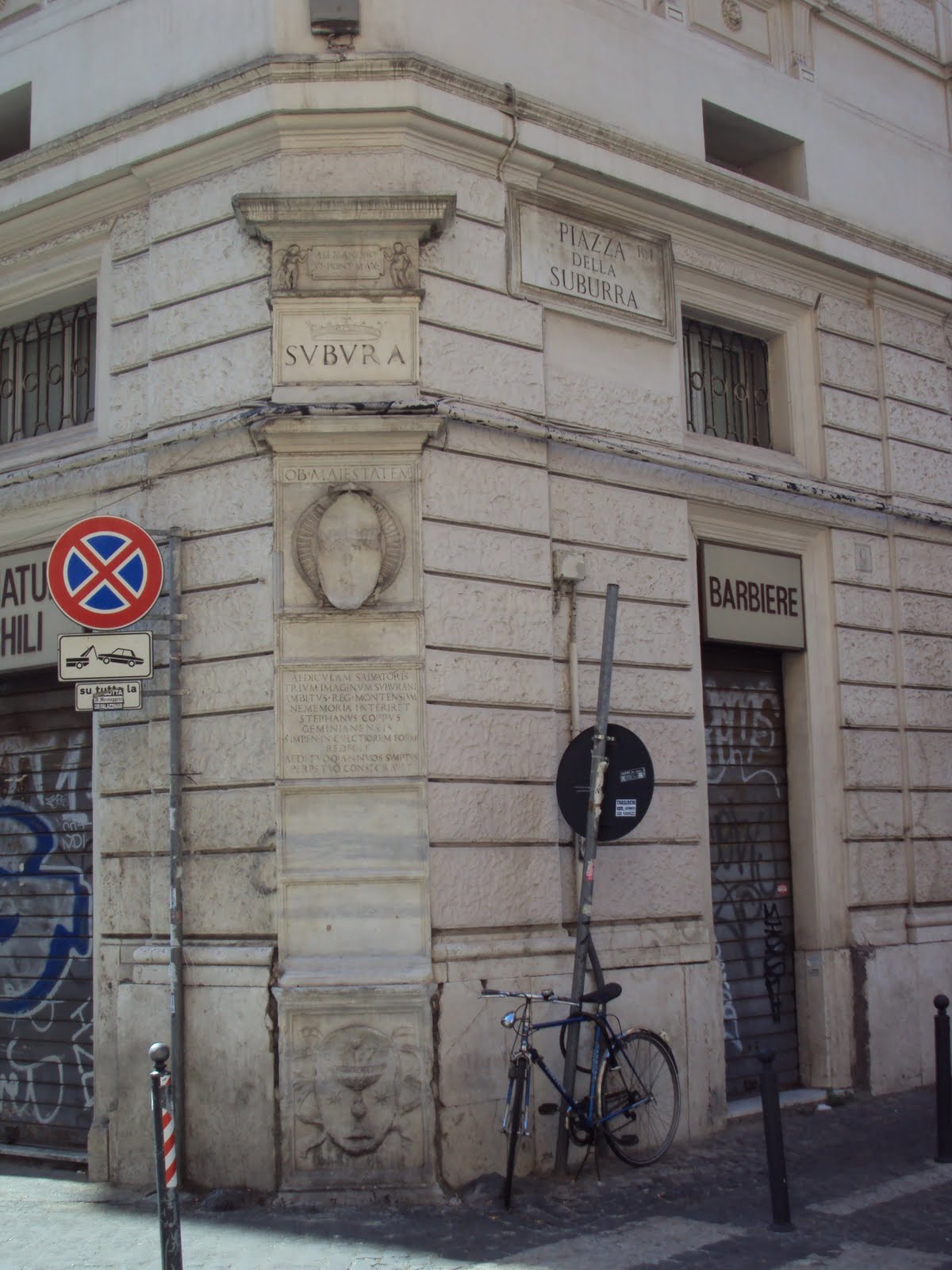
The Subura or Suburra in Modern times


In ancient Rome, the Subura was a district in central Rome, east of the Forum, lying between the Virminale and Esquiline Hills. It was a busy, noisy area, home to traders and manufacturers as well as to thieves, prostitutes and the poor. The presence of "foreigners" was notable, and there was most certainly a Jewish place of worship somewhere in the Subura. 

The wealthy, aristocratic Romans stayed away from this area of narrow alleys, and most ordinary Romans would not venture into certain parts of the Subura especially at the onset of darkness. It was a tough neighborhood, the ancient city's red-light district and was mostly controlled by gangs.

It was also a place of commerce, teeming with merchants, barber shops, cobblers, coppersmiths, blacksmiths  and had a large market were vegetables, wine, meat and other provisions could be found. 

Customers were the residents of the Suburba, the poorer residents of other parts of Rome, and the slaves in charge of households who knew where the bargains could be had. Some may have been shopping there with the full knowledge of their masters, others may have been doing it on the sly, maybe keeping the balance of market money towards their "purchase my freedom" fund.


In 2 BC to act as a firewall and visual barrier between the "unsightly" Subura and the "glorious" Forum a massive grey wall was built, parts of which are still visible today.


Wall along today's Via Tor d'Conti


Although shunned by the aristocrats and the rich, there was one notable resident of the Subura. Julius Caesar grew up and stayed there until he became Pontifex Maximus.


Bust of Julius Caesar
                                                              
Caesar's pedigree was impecable, and could rival anyone living on the Aventine, or the Palatine and maybe surpass a number of them. He was a member of the Julii clan who claimed descent from Iulus, son of the Trojan prince Aeneas (of Odyssey fame) and himself the son of Venus the goddess of love. How much more impecable can a pedigree be?


Depiction of Caesar from Asterix and Obelix

His cognomen, Caesar depending on which historical account you're reading could have come from either of these three reasons;  an ancestor was born by caesarian section, an ancestor had a rather full head of hair, or an ancestor had killed an elephant.


Despite their ancient pedigree, the Julii were not particulary politically powerful. Some authors like to point to Julius' or more specifically his mother, Aurelia's republican sentiments when mentioning that they lived in the Subura, but it is more than likely that, Julius' family home had been in the area of the Suburba before the Suburba began to expand around it. And admire him or not, Julius Caesar's ascent to power did sound the death knell of the Roman Republic.


A watering Hole in Rione Monti

 Today, the Monti district is a hip place, with it's charming cobble stoned tiny alleyways, boutiques and wine cellars. It is a rather small area as 30% of it was flattened by Mussolini to build the very wide Via dei Foro Imperiali.


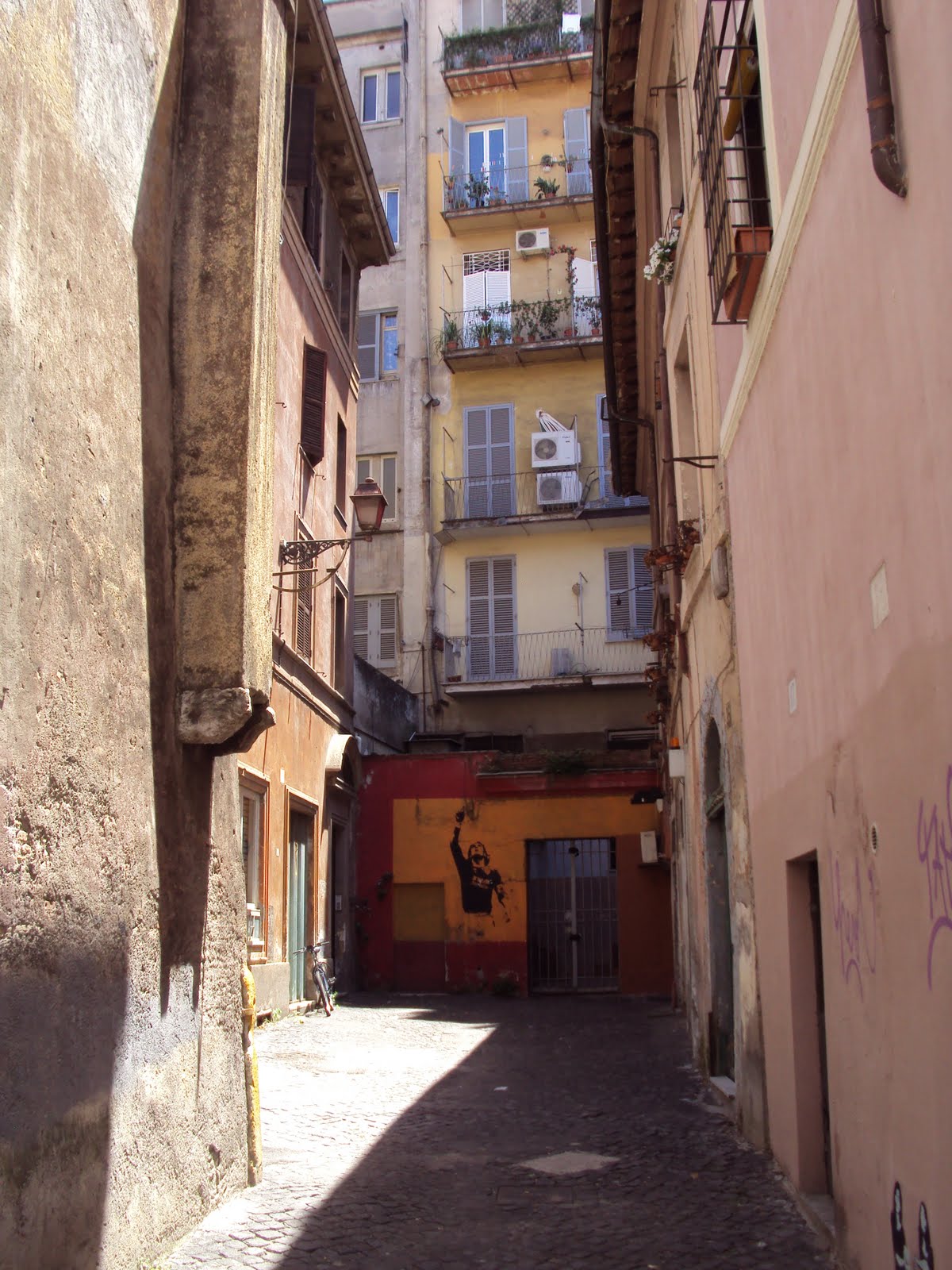
But as you walk this small neighborhood, you encounter picture perfect sites like this:

The neighborhood's ambiguous character is seen in the mix of modern and expensive condominiums and stepped backstreets of cramped "palazzi" one of them, with a vivid red and yellow mural of footballer Totti right on the wall of the dead end street.


Bars advertising "Happy Hour" are a stone's throw away from the Church of Santa Maria dei Monti. Making clear that this neighborhood evolved, unplanned to what it is today, and still retaining some character of it's ancient past.


A market, the Mercato Rionale is still operating in Monti, harking back to the Subura of ancient times, thus upholding centuries of tradition.


Mercato Rionale closed on Sundays

We attended mass at The church of Santa Maria dei Monti or as it is also called, church of the Madonna dei Monti, right at the end of Via Serpenti. This church was designed by Giacomo della Porta, who also worked on the Jesuit church, The Church of the Gesu.


Main Altar of Santa Maria dei Monti

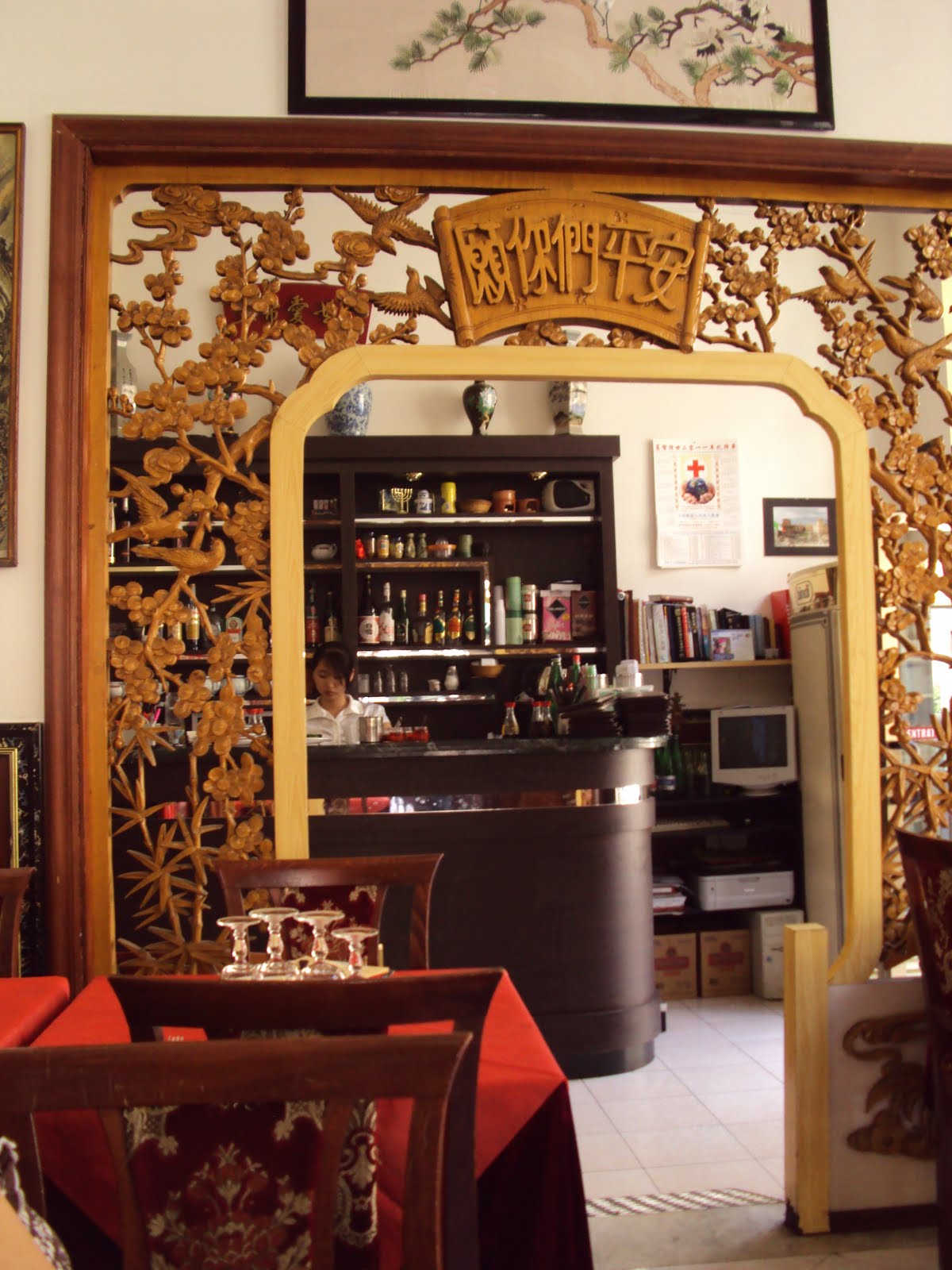
Right across the church on Via Serpenti, is a chinese restaurant, Pace. Strategically placed as we were starving by the time the mass ended. As luck would have it, the food was actually the best chinese food we've had so far here in Rome.


Interior of Pace
  
As we sat in this chinese restaurant eating our steamed spigoleto, a fine tenor's rendition of "O Solo Mio" drifted in from the piazza. "Appropriate", I thought to myself, "after all we are in the Subura!"


Friday, June 17, 2011

John Keats and the Scalinata di Spagna

There is a place in Rome that most visitors will visit at least once. The place is always teeming with people, even until the late hours of the night. Considered by some as the city center, it has been a favorite meeting point, ("meet you at the Spanish Steps"), for generations of tourists. The Spanish Steps (Scalinata di Spagna) is on the Piazza di Spagna, one of the stops on Metro Line A. You come out of the Metro right on the Piazza, which is almost completely encircled by buildings, and right at the center you see the Fontana della Barcaccia  (Fountain of the Ugly Boat) done by Pietro Bernini, the father of the more famous, more prolific Gian Lorenzo Bernini.   Apparently commisioned to remember the great Christmas day  (1598) flood, when legend has it, a barge was washed up from the Tiber to the Pincio Hill right beside the Piazza. This fountain has supplied clean drinking water for generations and is one of the grander drinking fountains you see all over Rome.


Fontana della Barcaccia


The Piazza has a notably international favor, including but not limited to the tourists that flock there. The Spanish Embassy is located here, the Trinita dei Monti at the top of the steps is a French church, and looking around you see Babington's Tea Room, the Keats' and Shelley Museum, a store called Byron and of course that ever present American fast food chain, MacDonalds!


Piazza di Spagna


Facing down the square, opposite the Fontana della Barcaccia is the Scalinita di Spagna, the Spanish Steps, a grand and imposing rather flamboyant structure. Climbing the steps is surprisingly easier than one anticipates. Since the steps are widely spaced, the ascent is gradual. There are 3 flights of stairs and 3 landings, an allusion, they say to the Holy Trinity . There are 138 steps which brings you up a rather steep slope from the Piazza Spagna to the Piazza Trinita dei Monti, the square upon which the Church of Trinita dei Monti is built. From there, you climb a few more steps to the front of the church and finally, you are rewarded with a panoramic view of Rome and the Via de la Condotti, Rome's most famous street for high end shopping.


Via della Condoti
  The steps are usually full of people, many choosing to sit on them, having their pictures taken, drinking, eating or simply resting. Going down the steps is accomplished in a zigzag pattern in order to avoid groups of people simply sitting and watching other people, simply sitting and watching.

Of several interesting places to visit around the Piazza di Spagna, I chose to go first to the Keats' Shelly Museum. After seeing John Keats' final resting place at the non-Catholic Cemetery, I was moved to find out more about his days here in Rome.


Keats' and Shelley House
Picture by Giovanni Dall'Orto

When Keats arrived in Rome in November of 1820, hoping to recover from tuberculosis, he was already gravely ill from a disease that killed his mother, his younger brother Tom and eventually, after Keats, his older brother George. He was accompanied by his friend, the painter John Severn. Keats Scottish doctor found them rooms in an apartment in Piazza di Spagna in what was the English quarter at the time. Keats and Severn shared the apartment, on the second floor, right beside the Scalinita de Spagna with their landlady. From his apartment window Keats could look out onto the steps and the piazza below.

Picture taken from Keats' window


Keats rarely left this apartment, except upon his arrival when he was feeling well enough to venture out, walking around the neighborhood. After December, he became very ill and died in February 1821 at the age of only 25. His companion John Severn was constantly at his side, caring for him.


A Dying John Keats as painted by his friend John Severn

Nothing of the furniture in the Keats' room of the museum is original, since Vatican law of the time decreed that everything should be burned, the prevaling practice at the time, attached to the disease tuberculosis. The Keats room contains memorabilia including the painting above and his death mask which is found on a table near the bed.


Keats' death mask

In the Salon there are large display cases filled with books which one is free to look at, to read or to use for research. I sat down in one of a number of high backed chairs and looked through a well thumbed book of Keats poems. 

         "That I might drink and leave the world unseen,
           and with thee fade away into the forest dim"
                                              from Ode to a Nightingale

         " Beauty is truth, truth beauty - that is all
           Ye know on earth and all you need to know!
                                              from Ode on a Grecian Urn

         " A thing of beauty is a joy forever;
           It's loveliness increases; it will never
           Pass into nothingness
                                                           from A Thing of Beauty is a Joy Forever

He wrote of beauty, of joy, of youth, of timelessness, of eternity but most of all he wrote of love.

            "To feel forever it's soft swell and fall,
              Awake forever in a sweet unrest
              Still, still to hear her tender-taken breath
              And so live ever - or else swoon to death"
                             from Bright Star, Would I Were Steadfast as Thou Art

Keats' last days in Rome were not easy ones, not only was he dying but he had also left Fanny Brawne, the love of his life back in England. He was depressed, weighed down not only by illness, but also a very sensitive nature, for which "the power of love was life-altering....life threatening." 

        "I have been astonished that men could die for religion-
        I have shuddered at it. I shudder no more-
        I could be martyred for my religion.
       Love is my religion - I could die for that."
                                               John Keats

When John Keats died, he was unknown, in addition his published works had been severly criticized. Sitting there in that room, reading poems that were familiar, poems that were read not only because they were required reading in high school, one cannot fail to reflect on "the slings and arrows of outrageous fortune".

Coming out of one's reverie, the sounds of the running water from the Fontana, people's voices and footsteps on the Spanish Steps and even the clatter of horses hooves, (from carriages bringing visitors around the piazza) striking the cobblestone begin to intrude, and a final thought ... sounds (several times magnified) that Keats must have also heard from this window.


Tuesday, June 14, 2011

By the Shadow of the Pyramid

There are very few places in Rome where you won't encounter hordes of tourists, frantic to take in everything they can before they need to leave. Can't blame them, there's just too much to see. However, with summer's  approach, these beautiful, cloudless days are accompanied by the brilliance and intense heat of that Roman sun. Battling the heat and the crowds, can try even the most intrepid of tourists.


Finding a quiet, cool place away from the crowds is therefore delightful. I found just that near the Piramide Metro Station (Metro Line B) as I was on my way home from walking the Aventine Hill. The place cannot be missed, first of all because of the landmark right beside it, the pyramid of Caio Cestio, a massive structure at the edge of Via Ostiense, and also because from the top of the walls, (not just any wall though, it's the Aurelian wall, started by Aurelian in 271 BC and completed by Probus in 280 BC) one sees trees, lots of trees! For someone trudging along under a very hot sun, it looks inviting indeed! 


The Aurelian Wall
 This unlikely place to de-stress is the Protestant Cemetery, a misnomer really as this cemetery is reserved for all non-Roman Catholics of all nationalities and religions.


the pyramid of Caio Cestio seen from the Protestant cemetery
  It's rather poetic, this juxtaposition of the Protestant Cemetery containing modern tombs and the pyramid, the tomb of Caio Cestio, a minor Roman bureaucrat who died in 12 BC. Stepping inside, after dropping a donation in the box at the gate, one immediately feels a tranquility, a serenity. The pyramid, and the  tall cypress and other evergreens cast their shadows on  neat gravestones.


Bushes with fragrant white flowers, which to me looked and smelled like jasmin are scattered here and there. Vines creep up the aurelian wall at the rear of the cemetery. And there is silence, a peaceful, blessed silence, broken once in a while by the tweeting of birds, the footsteps of visitors and the laughter of children, playing in an open area near the older part of the cemetery.


Part of the Aurelian Wall within the cemetery
 The lay-out invites one to meander and strategically placed benches encourages one to sit and linger.


In addition, a map identifies burial areas of several very important "residents". Most notable being, two  outstanding  English poets of the Romantic Age, John Keats and Percy Bysshe Shelley.

The first grave I came upon was Shelley's. He died in a boating accident off the coast of Viareggio in 1822. It is in the newer area of the cemetery almost against the wall. He is buried beside Edward Trewlaney, who proclaims their friendship in his gravestone.


Keat's grave is in the older section of the cemetery, tucked in the leftmost corner. His grave and that of his friend, Joseph Severn and Severn's son are arranged together in a plot planted with flowers and shaded by a tree. There is also a bench against the wall, facing the grave, inviting one to sit and contemplate. It is in the quietest part of the cemetery and very peaceful and beautiful.

Keats on the left, Severn on the right and Severn's son in the center

If you do allow yourself to sit down, you are forced to reflect on the words on Keat's gravestone:


                                    "Here Lies One
                          Whose Name was writ in Water"

Leaving one with a feeling of nostalgia and an unescapable sadness, a sense of loss..... maybe, for one so gifted to die so young! Oscar Wilde visited this place and Keats' grave in 1877 and he was moved to write a sonnet on Keats, parts of it read:
              
               "The youngest of the martyrs here is slain
                Fair as Sebastian and as early slain"


It is such a peaceful place that there is a reluctance to leave. And so I sat, lulled by the breeze and the silence, dozing off a little, to be rudely awakened by a rustle of wings, and the cawing of a black crow settling on the arm of the bench I occupied. He stared straight at me, I stared back and then I realized that it was darker, there were no more people around. I stood up abruptly, thinking to myself, "Shades of Edgar Alan Poe"!

And so I left, but not before giving another donation meant for the "other" inhabitants of the cemetery.


Monday, June 13, 2011

A comment

An arresting comment from a reader calls for an acknowledgment. In her words:

" The context of this church (capuchin crypt) is so different from the Khmer Rouge Killing Fields display and yet both are about the dead and their remains. One allows us to reflect on the mortality of Man, the other allows us to reflect on the cruelty and insane perceptions of Man."


In forcing us to contemplate our mortality, the displays in the Capuchin Crypt had a tongue-in-cheek flavor about them. Those monks had a sense of humor, macabre, it's true but a sense of humor nontheless.

Skulls from the Killing Fields
On the other hand, in the Killing Fields display, reflection on the issue of man's mortality is not even possible, the evidence of man's cruelty and insanity is overwhelming!

Sunday, June 12, 2011

A Dose of the Macabre

Waking up on a saturday morning is never easy, it is singularly more difficult in this Italian apartment, with shutters that completely close, not allowing even the minutest of light slivers through. In addition, the weather is beautiful, warm during the day, getting cooler as the sun drops and decidedly chilly at night and early mornings, very conducive for sleeping in! And when you've finally gotten yourself up, another challenge is getting the hubby, who has had a hard week at work, interested in traipsing around Rome with you. 

My plan for this Saturday was foolproof, promising to have lunch with him at this chinese restaurant in Termini, after we took a look at "something different".

 "Lunch?" "Chinese?" "Sure!" Whoever said, "the way to get a man to do something is to feed him", must have been a woman! 

Our destination was the Church of Sta. Maria della Concellazione, along Via Veneto, very close to Piazza Berberini, more specifically the Capuchin Crypt attached to it. The Capuchin Crypt is an ossuary or a bone house, containing the remains of 4,000 monks. First time I came across the term ossuary was in John Connelly's book, "The Black Angel". A good read, but definitely verging on the occult. And in typical John Connelly fashion, his description of the ossuary was vividly macabre! So it was with some misgivings that I walked into the crypt.

At the entrance, you are required to give a donation and told to put your cameras and cell phones away, "No photos please to show respect for the dead". (The pictures you will see below are from postcards, which by the way are for sale right there,  leading me to conclude that commerce trumps all. ) Then you step into a rather dark, poorly lighted corridor, the left side of which are six small chapels, where the bones of these monks are set into the walls in abstract or Christian patterns.


Some bones and skulls are simply piled up to form arches under which fully clothed skeletons in capuchin robes are positioned in various poses.


The chapels are named; the crypt of the skulls, the crypt of the pelvis, the crypt of the legbones and thigh bones which gives you a pretty good idea what bones are stored where. Some of the bones are nailed onto the ceilings of the chapels, one of them depicting the grim reaper


,

Creepy indeed!

The corridor ends and you have to turn back to leave the way you came in. We then proceeded to the Church, the simplicity of which differentiates it markedly from the other ornate baroque styled churches we had seen previously.


This simplicity and the silence of the surroundings is very conducive to contemplation and reflection, something that comes unbidden after viewing what was disturbing, yet fascinating.

This  contemplation of death, as seen in the crypt, is  a common theme in numerous paintings, and sculptures in churches  and museums around Rome.


St. Francis Meditating

Definitely macabre but  serving it's purpose, to teach the truth that all men must die and should therefore prepare themselves for this eventuality. 


As we prepared to leave the Church, I took out my little travel notebook, where I jot down things I want to remember and read again what was written in five languages at the crypt exit  "What you are now we used to be; what we are now you will be!"